Login
Login


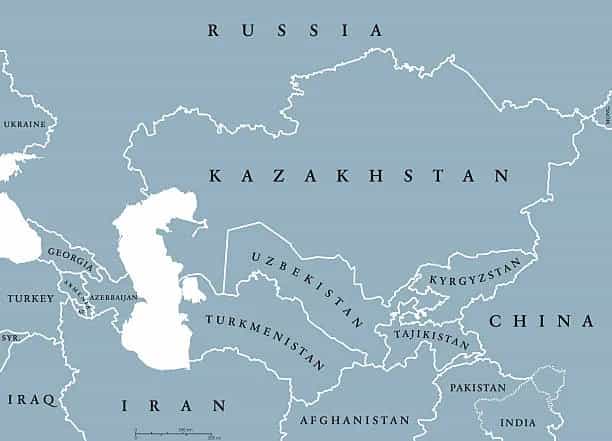
The Caspian littoral countries – Azerbaijan, Iran, Kazakhstan, Russia and Turkmenistan – must pool their scientific and technical potential to address the problem of the shallowing of the Caspian Sea. This was stated by the Chargé d'Affaires of the Russian Federation in Turkmenistan, Petr Shchukin, at the scientific and practical conference "Protection of the Caspian Sea Ecosystem: Regional Cooperation and Sustainable Development."
The conference was held in the “Awaza” National Tourist Zone in the city of Turkmenbashy on the Turkmen coast of the Caspian Sea and was timed to coincide with International Caspian Sea Day, which is celebrated annually on August 12.
"We cannot ignore the well-known problem of the shallowing of the Caspian Sea... This issue is particularly pressing for the Russian Federation," Shchukin said, noting that over the past 20 years, the area of shallow water in the northeastern Caspian, particularly in the Russian coastal zone, has exceeded 20 thousand square kilometers. According to him, this process negatively impacts the biosphere and ecosystem of the sea, the operation of ports, fisheries, and the sustainable development of economic and business activities in the region.
The diplomat emphasized that fluctuations in the Caspian Sea's water level were cyclical and had been observed previously, but there is no unified scientific explanation for the current shallowing. According to him, climate plays a key role in this process: the overall increase in global temperatures and shifting wind patterns are contributing to accelerated evaporation of water from the sea surface. According to Shchukin, it is still difficult to accurately predict the development of this trend.
"Under these conditions, it is crucial to unite the scientific and technical potential of all Caspian states to better understand the causes of the Caspian's cyclical nature, prepare forecasts, ensure the region's environmental security, and take practical measures to minimize the damage from climate change," he said, adding that joint efforts by the five Caspian states, expert cooperation within the five-party groups, and the effective use of existing Caspian structures, including the Committee on Hydrometeorology of the Caspian Sea, are necessary.
Shchukin expressed hope that the decisions of the Caspian Environmental Summit, which will be held in Awaza in October of this year at the initiative of the Turkmen side, will give impetus to this work.
The diplomat emphasized that preserving the Caspian Sea as a space of peace, stability, and good neighborliness is a common task for all Caspian states. Russia expects to resume a full-fledged five-party dialogue to address pressing environmental and economic challenges and strengthen regional security, he noted, adding that Moscow supports the further development of constructive cooperation across the entire spectrum of the Caspian agenda and is ready to facilitate the implementation of new initiatives that meet the interests of all littoral countries.