 Login
Login































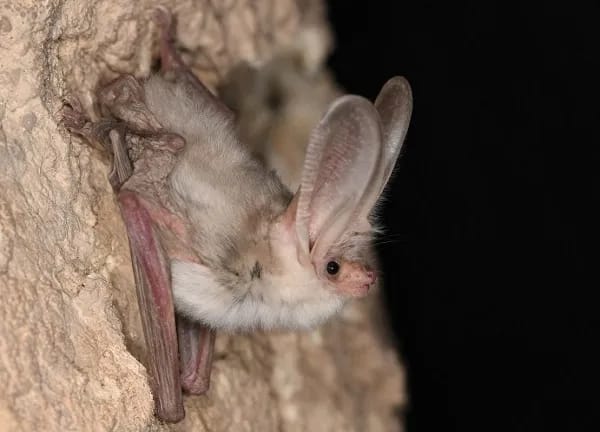
During a special expedition to the Karakum Desert in Turkmenistan, a Turkestan long-eared bat (Plecotus turkmenicus) was discovered – a species of bat that had not been seen alive since 1970.
As reported by newscentralasia.net, the expedition was organized in October of this year, when an international team of scientists from Germany, Uzbekistan, and Turkmenistan, led by the Museum of Natural History in Berlin, visited possible bat habitats in the Karakum Desert.
Researchers discovered a young female Turkestan long-eared bat in a cliff crack. An adult male was spotted in a loess cave located 87 kilometers away, in the border area with Uzbekistan. This marks the first time since 1970 that the existence of this species has been confirmed. They were also able to collect samples for genetic studies to study the evolutionary history of Central Asian bats.
For the first time in half a century, scientists have captured photographs, video, and audio recordings of living specimens of this mysterious endemic inhabitant of the Karakum Desert, previously known only from a few museum specimens in Russian collections. There were serious concerns that it was extremely rare or even extinct.
The species is seriously endangered, primarily due to climate change. The discovery of the long-eared bat in the border zone may also indicate its previously unknown presence in Uzbekistan.
Turkmenistan is currently incorporating the rediscovery of the Turkestan long-eared bat into its plans to establish a protected area covering over 50 000 hectares. This will benefit not only the endemic bat species but also all desert biodiversity, including large mammals such as the wild ass and goitered gazelle, the source notes.